Back to guide articles
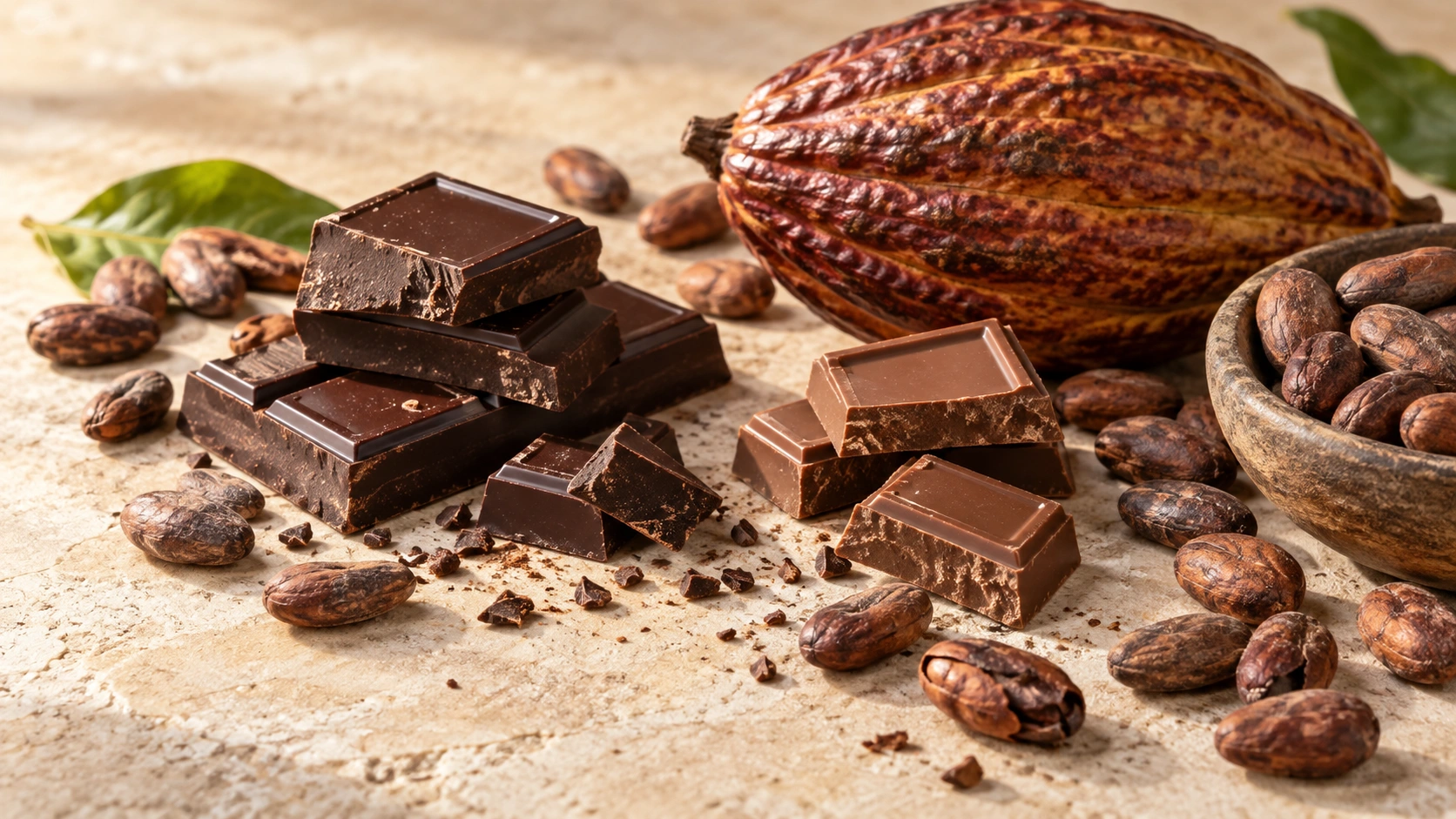
Chocolate pieces, cocoa pod and beans
Technical insights

Chocolate, Compound and Super Compound

An in-depth look at their differences and similarities, nutritional considerations, hot-weather and logistics performance, and next-generation product technologies.

Chocolate, compound and super compound can resemble one another in appearance and applications, yet differ in fat composition, processing behaviour, sensory profile, temperature tolerance and formulation flexibility. This article aims to explain technically why each may be chosen under different conditions, rather than position one against another.

Sensory quality and melting behaviour
Production and processing flexibility
Climate and logistics performance
Putting the topic in context

“Which is better?” is often not enough

Ranking chocolate, compound and super compound on a single quality scale overlooks an important part of product technology.

Each product group can meet a different need. In a bar, cocoa butter’s characteristic melting behaviour and a classic chocolate experience may take priority; in a wafer coating, rapid crystallisation and ease of production may matter more. For a product shipped to a hot country, shape stability and logistics resilience can become more important.

A technically sounder approach therefore considers the recipe, fat system, process and target market together. Advances in modern fat technology have taken compound products far beyond their former image as a simple chocolate alternative; the super-compound approach seeks to narrow the gap between sensory quality and functional performance further.

This content is for general information. It is not a health claim or medical advice. Nutritional and technical-performance assessments can vary with the recipe, raw materials, processing conditions and amount consumed.
Cocoa pod and beans
Basic definitions

What are chocolate, compound and super compound?

01 · Chocolate

What is chocolate?

Chocolate is a food made by combining raw materials such as cocoa products, cocoa butter, sugar and, depending on the variety, milk ingredients in specific proportions.

Cocoa butter is one of the most important factors distinguishing chocolate from similar products. Its distinctive crystalline structure, together with correct tempering and cooling, contributes to a glossy surface, characteristic snap, firmness at room temperature and rapid melting at mouth temperature.

These properties make chocolate distinctive from a sensory perspective. However, the same sensitive crystal structure can require greater care with temperature changes and unsuitable storage conditions.

02 · Compound

What is compound?

Compound, known as kokolin in Turkish, is a confectionery product developed to offer chocolate-like flavour, appearance and applications. Its fat phase may use vegetable-fat systems with different properties in place of, or alongside, cocoa butter.

Internationally, this group is commonly described as compound or compound coating. Depending on the fat system, melting behaviour, hardness, gloss, heat resistance, crystallisation rate and mouthfeel can vary considerably.

It is therefore incorrect to assume that all compounds have the same quality or properties. Products can range from economy lines to premium formulations targeting high sensory performance.

03 · A next-generation approach

What is super compound?

“Super compound” is not a separate, standardised official product category in legislation. In industry usage, the term may describe premium compound systems targeting sensory and physical performance much closer to chocolate than conventional compounds.

This approach may use specialised fat systems with high cocoa-butter compatibility, particularly CBE — Cocoa Butter Equivalent solutions. The aim is to bring melting, snap, gloss and mouthfeel closer to chocolate while offering more options in recipe and process design.

The main value of super compound is the goal of combining sensory quality with functional performance in one product, rather than a health claim.
Comparison at a glance

Main differences and similarities between the three groups

Although the fat system is central to the comparison, no single raw material determines actual product performance. Cocoa and milk ingredients, sugar content, particle size, refining, cooling and storage conditions also affect the final result.

PropertyChocolateCompoundSuper compound
Main fat structurePredominantly cocoa butterSpecialised vegetable-fat systemsSpecialised fat systems with potentially high cocoa-butter compatibility
Melting characterCocoa butter’s natural reference behaviourDepends on recipe and fat systemCan be designed to resemble chocolate closely
TemperingUsually requiredNot required for many systemsMay be required depending on the fat system
Gloss / snapCharacteristic when properly temperedCan be high, depending on fat system and processChocolate-like performance can be targeted
Temperature toleranceCan be more sensitiveHigh-temperature performance can be targetedSensory quality and stability can be optimised together
Formulation flexibilityMore limitedVery highHigh
Ease of processingTempering and precise temperature control are importantSimpler processing is possible in many applicationsCan vary between chocolate and conventional compound
Logistics performanceControlled temperatures may be more criticalGreater stability can be designed around the needHigh performance can be targeted
Cost controlMay be more exposed to the cocoa-butter marketCan be more flexiblePremium performance and cost can be balanced

The table describes general product behaviour; actual performance depends on the recipe and processing conditions.

Functional product design

Why was compound developed?

Explaining compound technology solely through cost advantages is incomplete. Cost control can matter, but one of the key strengths of modern compound systems is that the product can be designed for its intended use.

The rapid setting needed for an ice-cream coating differs from the flow required for a wafer coating. Baking chips need to withstand heat, while a coating expected to melt quickly in the mouth may need a different fat profile. Logistics stability can be more decisive for a product sent to a hot climate than for a premium product consumed in a cool climate.

Changing or rebalancing the fat system can therefore influence:

  • hardness and snap
  • melting point and melting profile
  • crystallisation rate
  • coating thickness and flow
  • temperature tolerance
  • shelf and surface stability
  • mouthfeel
  • ease of operation on the production line
Compound should be understood as a confectionery system whose functional properties can be targeted through appropriate design, rather than simply a product that replaces cocoa butter with another fat.
Confectionery and coating applications
A balanced nutritional assessment

Is compound unhealthy? Is chocolate automatically healthy?

A product’s nutritional assessment cannot be based solely on whether its fat is cocoa butter or vegetable fat.

The simple comparison “chocolate is healthy, compound is unhealthy” is scientifically insufficient. Total fat, saturated fat, trans fat, sugar, energy content, portion size and consumption frequency should all be considered when assessing a food’s nutritional profile.

01 · Total fat
02 · Saturated fat
03 · Trans fat
04 · Sugar
05 · Portion size
06 · Consumption frequency

Assessing modern compounds

Partial hydrogenation, used in some past fat systems, was associated with unwanted trans-fat formation and contributed to a lasting negative perception of compound. Modern fat technologies, however, are not all the same. Systems can now be developed without partial hydrogenation, with very low trans-fat content or with different saturated-fat profiles targeted through formulation.

It is therefore inappropriate to place all compounds in one health category solely because they contain vegetable fat.

Assessing chocolate

Likewise, calling a product chocolate does not automatically make it low in sugar or saturated fat. Depending on its recipe, chocolate can contain substantial amounts of sugar, total fat and saturated fat.

For consumers, the sound approach is to look at the nutrition table, ingredient list and portion size before relying on the product name.

How should super compound be assessed nutritionally?

Super compound’s main advantage is not a claim of superior health benefits. Its value lies in combining chocolate-like melting and sensory properties with the technical design flexibility offered by modern fat systems. Any health assessment should still be determined by the actual recipe and nutritional profile.

Climate conditions

Which product performs better in hot weather?

One of cocoa butter’s most appreciated properties is its rapid melting as it approaches mouth temperature, producing a clean and pleasant sensory experience. This characteristic can, however, become a disadvantage in hot surroundings.

High temperatures and repeated temperature fluctuations can increase the risk of softening, deformation, loss of gloss and fat bloom in chocolate.

Why can compound offer advantages in hot climates?

The fat system used in compound can be selected according to the target melting temperature and solid-fat profile. Some systems can therefore achieve greater shape stability and temperature tolerance than chocolate.

This can become an important advantage in hot climates, summer distribution or markets with limited cold-chain access. Nevertheless, no compound has unlimited heat resistance; the manufacturer’s recommended storage and shipping conditions must always be considered.

What about super compound?

When super compound targets melting behaviour very close to chocolate, its temperature behaviour may naturally also approach that of chocolate. Selecting a specialised fat system can nevertheless balance sensory quality with greater physical stability. It is therefore more accurate to say it can be optimised for the desired performance than that it is always more heat-resistant.

Hot climate and product resilience
The distribution chain

Why does logistics performance matter?

A food product leaving the factory in excellent condition is not enough on its own. It may pass through storage, loading, containers, road transport, port waiting periods, distributor warehouses and the final point of sale.

The following conditions are particularly important in long-distance transport:

  • container and vehicle temperatures
  • day–night temperature differences
  • long transit times
  • humidity and warehouse conditions
  • repeated heating and cooling cycles
  • cold-chain cost or availability

Well-formulated compounds can target greater shape stability, reduced bloom risk, increased tolerance to temperature fluctuations and longer preservation of shelf appearance. Particularly in exports, this matters not only for quality but also for product-loss and logistics-risk management.

The physical and sensory quality of a product when it reaches the customer is as much a part of product design as its quality at the factory.
Food transport and logistics
Production technology

What is tempering? What do CBS, CBR and CBE mean?

Tempering is one of chocolate production’s most critical processes. It involves controlled heating and cooling to guide cocoa butter towards the desired stable crystal structure. When performed incorrectly, problems can include a dull surface, soft texture, weak snap, difficult demoulding and bloom.

Many fat systems used in conventional compound may not require tempering because their crystallisation behaviour differs from cocoa butter’s. This can simplify the production line and reduce processing time, energy use and the risk of operator error.

CBS

Cocoa Butter Substitute

These are fat systems used as substitutes for cocoa butter. They can provide rapid crystallisation, hardness, gloss and temper-free processing, and may be widely used in conventional compound systems.

Compatibility between the fat system and cocoa butter must be carefully managed in recipe design.
CBR

Cocoa Butter Replacer

These fat systems serve as alternatives to cocoa butter and have physical properties different from CBS. In certain recipes, they may offer greater compatibility with cocoa butter and can work without tempering in many applications.

Selection depends on the application, desired hardness and melting behaviour.
CBE

Cocoa Butter Equivalent

These fat systems are developed to behave similarly to cocoa butter in their physical and crystalline properties. They can offer high compatibility with cocoa butter and play an important role in targeting chocolate-like melting, snap and mouthfeel in the super-compound approach.

Because of their cocoa-butter-like behaviour, tempering may again be required.
Flavour and mouthfeel

Where do sensory-quality differences arise?

Traditionally, well-made chocolate is considered a sensory-quality benchmark because of cocoa butter’s characteristic melting behaviour. Its firmness at room temperature and rapid melting near mouth temperature create a cool, clean and quickly melting mouthfeel.

Some older compound systems found it harder to approach this sensory experience. Modern fat technology, particle-size control, refining techniques, balanced milk ingredients and high-quality cocoa raw materials can considerably reduce the gap.

In premium compounds and super compounds, sensory quality does not depend on fat selection alone. The following factors act together:

  • quality and proportion of cocoa ingredients
  • melting profile of the fat system
  • particle size and refining
  • balance of milk ingredients and sugar
  • flavouring system
  • crystallisation and cooling conditions
Super compound is developed to approach the melting, snap and mouthfeel consumers expect from chocolate as closely as possible, while retaining the processing and formulation advantages of conventional compounds.
Compound does not have to mean “cheap chocolate”.

The existence of economy compound products does not mean all compounds are low quality. Chocolate is also available at different quality levels. Final quality results from many variables, from cocoa raw materials and the fat system to sugar content, refining and process control.

Applications

Which product may be more advantageous for each application?

Bars and an intense classic chocolate experience

Classic chocolate is a strong option where cocoa butter’s characteristic melting behaviour and a traditional chocolate profile take centre stage.

Wafer and biscuit coatings

Compound can offer significant advantages in rapid crystallisation, coating performance, ease of processing and high production-line efficiency.

Cakes and baking applications

Appropriate fat systems can be used to develop chips, pieces or coatings with greater resistance to baking temperatures or processing conditions.

Ice-cream coatings

Specialised compound fat systems that set quickly and provide controlled fracture during consumption can offer important advantages in ice-cream applications.

Exports to hot climates

Compound or super-compound systems designed with temperature stability as a priority can help target greater physical resilience in long-distance distribution.

Premium compound products

The super-compound approach can be a strong option when chocolate-like sensory quality and greater formulation flexibility are required together.

High-capacity production

Fat systems that do not require tempering can simplify the production line, ease process control and support capacity utilisation.

Products requiring a specific melting profile

Fat-system design can produce systems that are harder, melt faster or slower, or retain their shape at particular temperatures.

Markets with high logistics risk

Where temperature control is difficult throughout distribution, product formulation can be optimised around logistical realities.

Frequently asked questions

Clear, concise answers

Is compound chocolate?

No. Although they may have similar appearances and applications, their fat compositions and regulatory positions differ. Compound is a distinct product group with its own technological aims and application advantages.

Is compound unhealthy?

It is incorrect to describe a product as unhealthy solely because it is compound. Fatty-acid profile, trans and saturated fat, sugar, energy content, portion size and overall dietary pattern should be considered together.

Does vegetable fat automatically make a product unhealthy?

No. Vegetable fats do not share a single nutritional profile. The type of fat and its processing method matter. Current fat technologies differ from some partial-hydrogenation methods used in the past.

Is super compound different from conventional compound?

In industry usage, generally yes. Super compound may describe a premium compound approach targeting melting, snap, texture and mouthfeel closer to chocolate. The term is not, however, an official regulatory category.

Is compound more resistant to hot weather?

The right fat system can target greater temperature tolerance than chocolate. However, not all compounds are alike, and no product should be assessed independently of appropriate storage conditions.

Does super compound need tempering?

It depends on the fat system. CBE-based systems with high cocoa-butter compatibility and similar crystallisation behaviour may require tempering.

Which is higher quality: chocolate or compound?

Quality cannot be assessed independently of intended use. One characteristic may matter for a premium bar, while another is critical for a coating shipped to a hot climate. The right product is the one that best meets the target application.

Is compound used only to reduce costs?

No. Cost advantages can be a factor, but ease of processing, rapid crystallisation, temperature tolerance, logistics stability, varied melting profiles and application-specific functionality are also important reasons for its use.

Final assessment

Chocolate and compound do not have to be rivals

Chocolate is a strong product group because of cocoa butter’s distinctive character, traditional perception and sensory experience. Compound can offer different advantages, including ease of processing, heat resistance, logistics performance and formulation flexibility.

The super-compound approach aims to narrow the distance between these worlds, bringing chocolate-like flavour, melting, snap and mouthfeel together with the stability and product-design options offered by modern fat technology.

It is therefore more meaningful for future product assessment to move beyond “chocolate or compound?” and ask which product delivers the most appropriate performance under the intended conditions of use.

Cocoa cultivation