Back to guide articles
Compound Coating Technologies
Five-part technical series

Compound Coating Technologies

Explore the process principles of compound coating for dragées, Turkish delight, cezerye, pişmaniye, wafers, biscuits, donuts, cakes and bars in one comprehensive guide, with product-specific challenges, selection criteria, quality control and troubleshooting.

Use the top menu to jump to a topic, or scroll down to read the complete guide.
Nut bars being coated in compoundCompound-coated almond dragéesCompound-coated wafers and biscuits
Compound Coating Technologies · Part 1/5

Compound Coating Guide: How to Coat Correctly

Process principles for successful compound enrobing, bottoming, dipping, drizzling and panning.

Choosing a coating methodViscosity and coating weight controlCooling and defect analysisReading time: 12–15 min
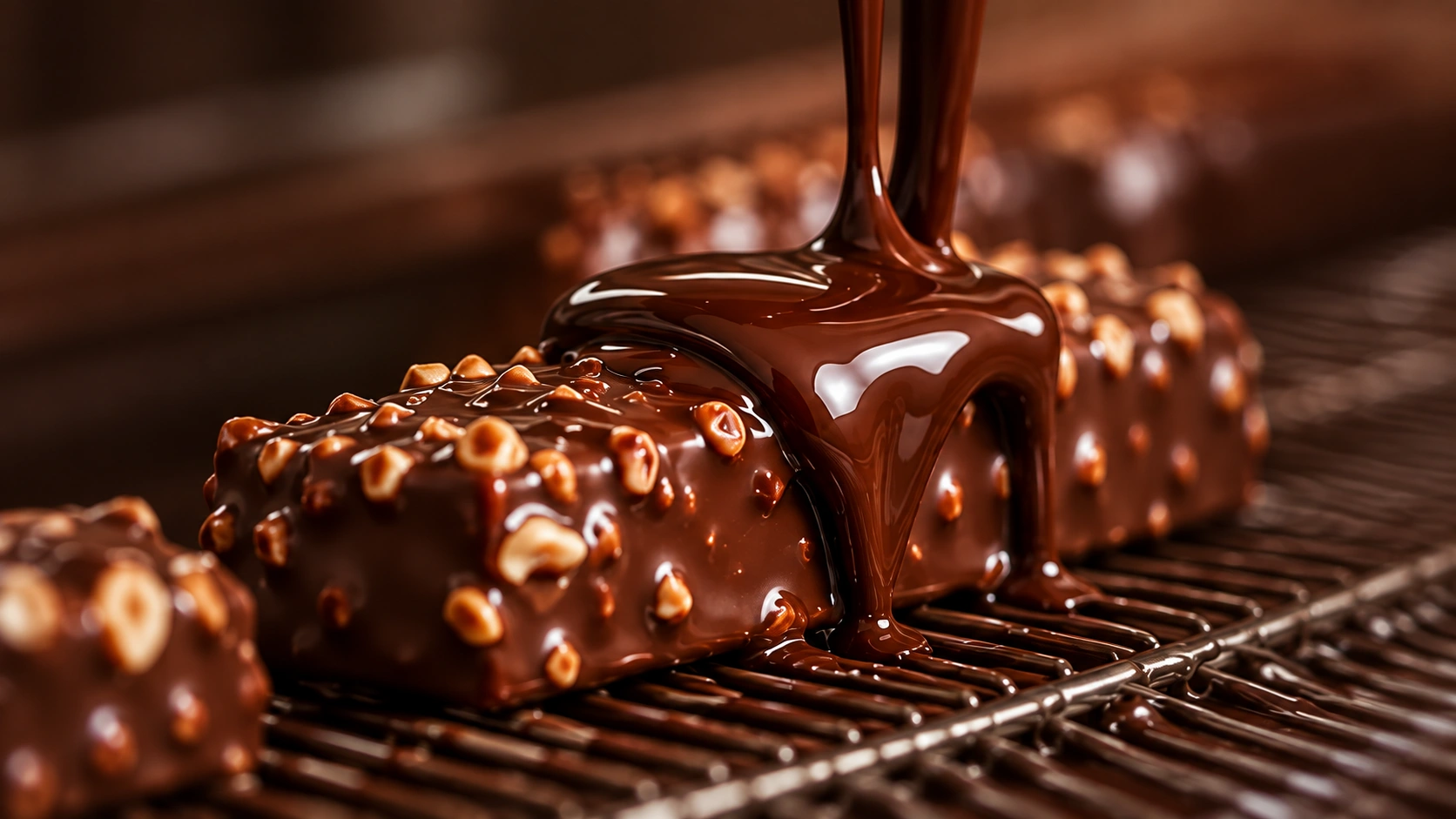
Nut bars being coated in compound

Coating is more than dipping a product in compound

Successful compound coating is a process design that jointly manages the centre's surface, coating fat system, flow, working temperature, mechanical application and cooling. The same compound can produce a completely different surface at another centre temperature or belt speed. Good coating must therefore do more than look glossy: it must adhere, stay at the target weight, remain attached during cutting or biting, and retain its structure throughout shelf life.

Basic approach: define the centre's needs first, then select compound flow and fat properties accordingly. A single coating for every product often leads to unnecessary thickness, cracking or poor mouthfeel.

Seven key variables determining coating success

1. Centre surface

Dry, oily, starchy, crisp, soft or rough surfaces adhere to compound differently.

2. Fat system

Hardness, melting, fracture, flexibility and cooling requirements vary with the fat matrix.

3. Flow

Viscosity and flow behaviour directly affect layer thickness, edge accumulation and coating weight.

4. Working temperature

Too low a temperature can cause a heavy, marked surface; too high can cause thin coating and slow setting.

5. Application method

Enrobing, bottoming, dipping, drizzling and panning require different coating characteristics.

6. Removing excess coating

Air blowing, vibration and detailing reduce skirts, base build-up and unnecessary coating weight.

7. Cooling

Crystallisation rate and uniformity determine gloss, fracture, adhesion and resistance to bloom.

When should each coating method be used?

Enrobing / curtain coating

Products travel on a wire belt through one or more curtains of compound. This suits biscuits, wafers, bars, cakes and many shaped products requiring high throughput and repeatable coating weight.

Bottoming / base coating

Only the bottom is coated, or it is coated first. This can create a base barrier against moisture or fat transfer, reduce sticking, or form a partial coating.

Dipping

A practical method for donuts, Turkish delight and small pastry items. Dip depth and product surface temperature influence the evenness of the coating line.

Drizzle / line decoration

It provides visual and sensory accents rather than a full coating. Fine flow, nozzle diameter and line spacing must be managed together for repeatable decoration.

Panning / dragée coating

Small doses of coating are added to centres in a rotating pan to build layers. The aim is a uniformly growing shell, not one thick layer applied at once.

How should centres be prepared for coating?

Many coating defects arise from the product being coated rather than the compound. Free water, condensation, excess flour or starch, loose crumbs and free surface oil can reduce adhesion. Before coating, products should be as uniform in temperature and size as possible: large temperature differences can produce both heavy and very thin coatings on the same line.

Inspect the surface

Check the actual product for free moisture, sweating, crumbs and surface oil.

Balance the temperature

A hot centre can delay setting; a very cold one can freeze the coating prematurely, leaving marks and weak adhesion.

Narrow the size distribution

Similar sizes give more uniform coating ratios, especially for dragées and small products.

Consider a precoat if needed

For very moist, oily or fragile centres, a thin precoat or barrier can improve the subsequent main coating.

Viscosity and coating thickness

In coating, flow means more than passing through a pump. It determines corner coverage, retained thickness, ease of thinning by air blowing and how dominant the shell feels in the mouth. More fluid coatings generally suit fine, elegant layers; fuller-bodied coatings suit a distinct shell and a higher coating ratio. Centre surface, temperature and line geometry can modify this relationship.

ConditionLikely resultWhat to check
Flow too low / compound too thickThick coating, corner build-up, high weight, heavy mouthfeelWorking temperature, fat system, solids loading, line recirculation time
Flow too high / compound too thinVisible centre, low weight, poor colour coverage, uneven baseFormulation flow, temperature, curtain volume, blower setting
Flow changes along the lineWeight and appearance vary within the batchCirculation, temperature uniformity, holding time and compound ageing in the line
Important: there is no single correct working temperature for compound. CBS, CBR, CBE and other fat systems behave differently. Establish the exact range using the selected product's technical sheet and trials on the actual line.

Process sequence on an enrobing line

Prepare homogeneous compound

Without complete melting and uniform temperature, partially formed crystals or viscosity differences may enter the line.

Adjust the curtain and bottom bath

Adjust the upper curtain, second curtain and bottoming quantities independently according to product geometry.

Remove excess coating in a controlled way

Use the blower, vibration and detailer to reduce weight without stripping the coating completely from corners and bases.

Manage cooling progressively

Avoid a surface that crusts too quickly while the interior crystallises late, and avoid moisture condensation.

Stabilise before packing

At the packing area, the surface should be dry, non-sticky and mechanically strong enough.

How can coating weight be optimised?

Coating ratio is part of product identity, not just cost. A very thin coating may fail to hide centre defects or provide the desired snap. An overly thick one can mask centre flavour, add unnecessary cost and feel hard to bite. Set the target weight by considering surface area, density, desired flavour balance and resistance during packaging together.

For practical quality control, weigh samples before and after coating at regular intervals. Track both the average coating percentage and the distribution between products. A correct average with a wide spread still indicates an unstable line.

Cooling, crystallisation and bloom control

The end of the coating line marks the start of crystallisation, not the end of the process. Cooling should develop the fat structure in a controlled way, not make the product as cold as possible. Excessively aggressive cooling increases surface stress and condensation risk; insufficient cooling can cause sticking and deformation in the package.

Fat incompatibility, migration from centre to coating, temperature fluctuations and unsuitable storage all contribute to bloom. Assess shelf stability with accelerated and real-time tests, not just appearance at the tunnel exit.

Common coating defects and quick diagnosis

SymptomPossible causeFirst checkpoint
Coating separates from the centreMoisture, oily surface, very cold centre, mismatched hardnessCentre surface and product temperature
Overly thick / heavy shellHigh viscosity, low working temperature, weak blowerFlow and excess removal
A skirt around the lower edgeInsufficient vibration/detailing, high coating weightVibration and belt transfer point
Dull surfaceUneven crystallisation, surface moisture, temperature fluctuationCooling and packing environment
CrackingCentre/coating flexibility mismatch, thick shell, moisture or temperature changesFat system and coating thickness
Pinholes / gapsAir, rough surface, inadequate wettingCentre preparation and curtain behaviour

Practical quality-control checklist

Appearance

Gloss, uniform colour, corner coverage, base and line marks.

Coating weight

Monitor variation between products as well as average coating ratio.

Cross-section

Inspect layer thickness and centre/coating contact in cross-section.

Bite / fracture

Check whether the coating separates from the centre and reaches the target hardness.

Shelf-life test

Track bloom, fat migration, moisture and sticking inside packaging over time.

Process record

Record temperature, belt speed, blower and coating weight results together.

Frequently asked questions

Can the same compound be used for dragées, wafers and donuts?

Possible use does not mean optimum results for all three. Dragées need layer build-up and controlled setting; wafers need a thin crisp shell; donuts often need a more flexible surface. Select the fat matrix and flow for the application.

Does compound coating always avoid tempering?

Many traditional compound systems are designed to work without tempering, but the term covers different fat systems. Follow the product's technical sheet.

What is the best way to reduce coating weight?

Simply raising temperature is not the right approach. Optimise compound flow, curtain uniformity, blower/vibration settings and centre geometry together.

Starting matrix by application

Start coating development by defining the product's mechanical and sensory needs rather than choosing a working temperature first. Use this matrix to design the first pilot trial; confirm exact parameters against the compound specification and actual line behaviour.

ApplicationFirst objectiveCompound characteristicsLine focus
DragéesControlled layer growthGood spreading + quick setting between layersSmall doses, pan movement, conditioned air
Turkish delight / cezeryeAdhesion and a crack-free shellStructure accommodating centre deformationSurface preparation, first layer, cooling
WafersThin, crisp layerLow/medium viscosity, clean snapWafer moisture balance, blower, coating weight
BiscuitsUniform coverageFlow suited to the surface typeCrumb control, curtain, bottoming
DonutsFlexible glaze with good adhesionMore compliant / elastic structureProduct temperature, draining, setting
Cakes / barsCutability and adhesionMechanically compatible with the centreCrumbs, surface oil, coating thickness

What data should be recorded in pilot trials?

Do more than note whether a trial looked good. Record tank and centre temperatures, belt or pan speed, blower/vibration level, product weight before and after coating, tunnel-exit surface condition and hardness after 24 hours. Re-examine after one week and, if possible, accelerated temperature cycling to catch bloom or separation not visible in fresh products.

This data-based approach turns judgement by eye into a repeatable industrial process. Track the same quality indicators throughout the seasons, particularly for export products, to understand summer/winter production differences.

Technical source notes

This article draws on industry sources, equipment manufacturers' process descriptions and general food-engineering principles. Validate exact working temperatures, cooling profiles and formulations against the compound's technical specifications and the production line.
Compound Coating Technologies · Part 2/5

Compound Coating Technology in Dragée Production

Layer build-up, cooling, surface smoothness and finishing for hazelnut, almond, roasted chickpea, cereal, dried-fruit and biscuit centres.

Centre preparationLayer build-upDragée defects and solutionsReading time: 10–13 min
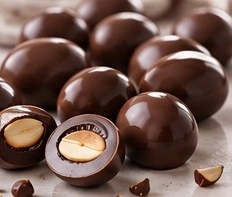
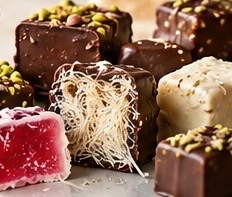
Compound-coated almond dragées

Why is panning a separate specialism?

Panning aims to enlarge centres progressively through successive thin layers in a rotating pan, rather than coat them in one pass. Constant movement and collisions spread the layer around each centre. Pan fill, rotation, product size and air temperature therefore influence the final surface as much as coating viscosity.

Key difference: enrobing removes excess coating; panning retains most of the compound on the centres in a controlled way. Dosing and the setting time of each layer are therefore much more critical.

Which centres suit compound dragées?

Nuts

Hazelnuts, almonds, peanuts and pistachios provide strong sensory contrast; control surface oil and cooling after roasting.

Dried fruit

Moisture and surface stickiness are more critical for raisins and similar centres, which may stick together.

Cereal / crisp centres

Light, crisp centres build up quickly and are impact-sensitive; select pan load and mechanical movement carefully.

Biscuit / extruded centres

Sharp corners may be difficult to cover initially; an even first shell makes later layers easier.

Coffee beans

A thin, uniform coating can balance the intense flavour and hard centre.

Praline / soft centres

Centre temperature and mechanical strength become more critical; manage the process gently to avoid deformation.

Centre preparation: half the work of good dragées

Centres entering the pan should be similar in size, clean and equilibrated to process temperature. Residual roasting heat can slow coating, while free surface oil can impair first-layer adhesion. Dust, salt or loose skin fragments can create local defects.

CentreSpecific riskPreparation approach
Hazelnut / almondSurface oil, size differencesCooling, sieving and removing loose particles
RaisinsStickiness, moistureDry, freely moving surface; suitable precoat if needed
Cereal / crisp centreBreakage, low densityGentler movement and controlled batch loading
Biscuit centreCorners, crumbsDust and crumb control; an even first layer

Stages of dragée coating

Conditioning centres

Stabilise product temperature and free tumbling in the pan. Resolve sticking or climbing up the pan wall before adding coating.

First adhesion layer

Keep the first dose small and controlled. The aim is a continuous surface for later layers to adhere to, not immediate thickening.

Building layers

Add small compound doses. After each dose spreads over the centres, use controlled air to set it sufficiently. Adding the next dose too early can cause clumps.

Smoothing the surface

Near the target coating ratio, manage doses and process conditions to reduce surface roughness.

Resting and finishing

Once the coating is structurally strong enough, leave it matte, dust with cocoa or powder for a truffle finish, or use a suitable finishing/polishing system for gloss.

Layer thickness and centre/coating balance

Dragée quality is more than a smooth, glossy surface. The first bite reveals the centre/coating ratio. Thick layers mask hazelnut or almond flavour; very thin ones may leave surface defects visible. Monitoring batch weight throughout the process is therefore a practical way to control target coating gain.

The target ratio matters for cost and strength as well as flavour. On softer centres such as dried fruit, a shell can improve transport resistance; however, a very hard shell on a very soft centre may feel detached when bitten.

Managing the pan, movement and air

Centres must tumble continuously; merely sliding along the wall does not build uniform layers. Adjust rotation to product size and batch load. Industrial systems may use cold/conditioned air to speed setting and warm air to manage the surface during finishing or process transitions.

Process principle: do not add layers faster than they can set. When clumping occurs, review dose size, centre temperature and pan movement together instead of only increasing airflow.

Advantages of compound in dragées

Suitable non-tempering compounds can simplify panning and improve layer repeatability. Fat selection can tailor hardness, melting, gloss and heat resistance to different markets. Compounds do not all behave alike: consider compatibility of lauric and non-lauric fats with the other fats in the recipe.

Application notes by centre type

CentrePriorityCoating characteristics
HazelnutRoasted flavour + oily surfaceAdherent, crisp shell; monitor fat migration in shelf tests
AlmondLong / oval geometryEven growth at the tips and uniform layers
PistachioValuable centre flavourBalanced coating ratio that does not overpower flavour
Dried fruitMoisture and stickinessStrongly adherent layer stabilising the centre
Cereal crispsFragilityThin, fast-setting layer under low mechanical stress

Dragée defects: causes and starting points

DefectLikely causeFirst correction
Centres stick togetherExcess dose, insufficient setting, hot centresSmaller doses + setting-time control
Very rough surfaceInsufficient spreading between layers, overly fast settingReview the dose/air balance
Coating thin in placesDifferent centre sizes, poor pan movementSize grading and batch load
Coating cracksCentre/shell hardness mismatch, temperature fluctuationFat system, coating ratio and storage
Poor glossSurface not smooth enough or unstable finishing conditionsSurface quality and dryness before finishing

Quality control

Track total coating gain, size distribution, breakage rate, smoothness, bite and shelf stability, not only gloss. For nut centres, also consider oxidative stability: the coating may retain its appearance while the centre fats' sensory quality changes over time.

Frequently asked questions

Should the most fluid compound be chosen for dragées?

Not always. Very fluid compound can help form thin layers, but sufficient coating must remain on the surface for the centre and process requirements. Consider pan type, centre geometry and target coating ratio together.

Is cold air needed after every layer?

Air conditioning is important, but its intensity and duration vary by product. The aim is controlled setting, not overcooling the centre.

Can glossy and matte dragées use the same coating?

The main coating can be similar; finishing, polishing or dusting can create different final surfaces.

Pilot production plan by centre

Optimum panning settings vary with centre density and surface chemistry. For a new centre, start with a small pilot batch rather than moving directly to a large pan.

CentreInitial pilot focusSignal to monitor
HazelnutSurface oil and cooling after roastingFirst layer adheres without sliding
AlmondEven layers at the tipsThinning at poles due to oval geometry
PistachioCoating ratio preserving centre flavourShell flavour does not dominate
RaisinsMoisture and stickinessDoubles or clumps during the first doses
Cereal crispsMechanical breakageBroken pieces and dust at the end of panning
Biscuit centreCovering cornersSharp edges visible after the first layer

Why dosing discipline matters

The correct total compound quantity alone is not enough. Many small doses and a few large ones can produce different surfaces at the same total weight. Large doses can form liquid bridges and clumps; very small, overly frequent doses can prolong processing unnecessarily and create rough layers. The optimum dose spreads over all centres and gains enough structure before the next addition.

End-of-batch evaluation

Inspect cross-sectional coating uniformity as well as gloss. Random samples can show overall diameter, thickness and centre eccentricity. If some pieces remain much smaller than others, investigate centre size distribution and pan movement before blaming the coating recipe.

Also monitor oxidation of nut-centre fats. The outer coating may look stable while rancidity inside reduces sensory quality over a long shelf life. Shelf tests must therefore cover both shell and centre.

Technical source notes

This article draws on industry sources, equipment manufacturers' process descriptions and general food-engineering principles. Validate exact working temperatures, cooling profiles and formulations against the compound's technical specifications and the production line.
Compound Coating Technologies · Part 3/5

Compound Coating for Turkish Delight, Cezerye and Pişmaniye

Surface preparation, adhesion, coating hardness, moisture transfer and shelf stability for moist, sticky or mechanically delicate centres.

Adhesion on moist centresPişmaniye's delicate structureFat and moisture balance in cezeryeReading time: 11–14 min
Compound-coated Turkish delight, cezerye and pişmaniye

Why should these three products be coated differently?

Although all three seem to be traditional sweets suitable for compound coating, their centres differ greatly. Turkish delight is elastic and relatively moist; cezerye is denser and stickier, with fruit, sugar and often nuts; pişmaniye is very light, fibrous and mechanically delicate. One formulation or line setting should not be expected to produce the same quality in all three.

The central design question: how does the centre interact with compound? Is the surface covered in water, starch, oil or loose fibres? Can coating hardness accommodate centre deformation?

Turkish delight: surface irregularity undermines adhesion

Depending on production and cutting, Turkish delight may carry starch or powdered-sugar residues, free moisture or slight stickiness. Coating directly over this can attach to a loose surface layer instead of the centre. The shell may then peel off in plates during cutting or biting.

Process approach for Turkish delight

Standardise the surface after cutting

Uncontrolled excess starch or powder can spoil the coating surface; the surface must not be wet either.

Balance centre temperature

Warm Turkish delight can delay setting; a very cold surface can set the compound too early and impair wetting.

Consider a thin first layer

A thin, continuous first layer on moist or sticky centres can help the main coating develop more evenly.

Match coating hardness to the centre

A brittle shell may not follow Turkish delight's elastic deformation and can crack during use.

Full, partial and decorative coating on Turkish delight

Full coating

Provides a stronger moisture-transfer barrier and a more intense compound experience; adhesion and shell hardness are critical.

Base / partial coating

Can make handling easier, create visual contrast and reduce the coating ratio.

Drizzle

Preserves the centre's traditional appearance while adding flavour and a visual accent.

Cezerye: managing moisture and surface oil together

Cezerye may combine a carrot or fruit base, sugar and nuts. Its surface can be rougher and oilier than Turkish delight. If coconut or other surface coatings are present, control loose particles before compound coating; otherwise the coating adheres to them rather than the centre.

Drying level strongly changes cezerye behaviour. A very soft, moist centre can stress the shell from inside; an overly dry one can lose its traditional bite. Fix the centre specification before developing the coating process.

Suitable coating characteristics for cezerye

Choose coating to balance cezerye's dense, chewy centre. An overly thick, hard shell can detach at the first bite. Thinner or more compliant coatings often feel better integrated. For nut-rich centres, also monitor fat migration throughout shelf life.

RiskSymptomApproach
Loose surface particlesLocal peelingStandardise the surface before coating
High centre moistureDulling / softeningCentre specification + moisture-barrier packaging
Nut oilSurface changes during long storageFat compatibility and migration testing
Overly hard shellCoating separates from centre when bittenMore compliant fat system or thinner layer

Pişmaniye: coating without crushing

Pişmaniye presents a different challenge: a very light, fibrous, pressure-sensitive centre. Compression during handling or impacts before coating can reduce volume. Standardising product shape and feeding it gently are therefore as important as the compound itself.

Three coating objectives

Preserve the fibres

Avoid unnecessary compression before coating and provide gentle transfer points.

A sufficiently strong shell

Coating can protect the delicate centre in handling and packaging, but an overly heavy shell masks pişmaniye's character.

Protection from moisture

Pişmaniye is moisture-sensitive. Full coating can provide a barrier, but the packaging's moisture barrier remains critical.

Dipping or enrobing for pişmaniye?

Small, standardised pieces can be dipped or run through a suitable enrober. Industrial enrobing can give more repeatable coating weights, provided wire-belt transfers do not crush the product and bottoming does not build up excessively. Dipping is flexible for small batches but can increase operator-related weight variation.

Why is moisture migration especially important here?

Fat-based compound contains no water, yet centre moisture can change surface behaviour and texture contrast over time. An intact coating alone is insufficient. Packaging water-vapour resistance, storage temperature and temperature fluctuations determine shelf performance of the centre/coating system.

Condensation warning: moving cold products into warm, humid air can cause surface condensation, damaging appearance and package stability. Control temperature and humidity transitions between the cooling tunnel and packing room.

Coating selection for the three products

ProductCentre characteristicsPriority coating propertySpecific control
Turkish delightElastic, moist, potentially stickyGood adhesion + fracture compatible with the centreStarch/powder and surface moisture
CezeryeDense, rough, may contain nutsGood wetting and pore coverageLoose particles, fat migration
PişmaniyeLight, fibrous, fragileFast setting + low mechanical loadCrushing, moisture barrier, packaging

Common defects

SymptomMost likely areaCheck
Turkish delight shell peelsSurface preparation / hardness mismatchStarch, moisture, first layer and coating hardness
Rough cezerye surfaceCentre roughness + high viscositySurface standard and flow
Pişmaniye loses shapeMechanical handlingFeeding, belt transfers and compression
Coating becomes dull during storageMoisture / temperature / fat migrationStorage, packaging and fat compatibility
Base too thickEnrober settingsBottoming level, vibration, detailer

Packaging and shelf stability

All three centres can be strongly affected by ambient moisture. Compound coating should not be seen as eliminating the need for packaging. A suitable moisture barrier, reliable heat seals and storage limiting temperature fluctuations are critical to preserving quality.

Frequently asked questions

Must all starch be removed from Turkish delight?

The aim is to remove the uncontrolled loose layer. The ideal surface depends on the production method; verify adhesion and appearance with small trials.

Should pişmaniye coating be hard?

It needs enough structure for transport, but an excessively hard, thick shell can overpower the light fibres. Aim for balance.

Can Turkish delight and cezerye use the same compound?

Possibly, but results are not guaranteed to match. Cezerye's roughness and fat content differ from Turkish delight's moisture and elasticity requirements.

Pilot trial plan by product

The most useful approach is to identify separate risks for each centre and run small pilots, rather than simply apply one compound to all three and compare.

ProductPilot variableSuccess criterion
Turkish delightSurface starch/powder, centre temperature, first-layer thicknessNo peeling after 24 hours or during shelf tests
CezeryeSurface roughness, free oil, coating flowPores covered without excessive weight gain
PişmaniyeProduct compression, belt transfers, coating weightFibre structure and volume retained

Cross-section test for Turkish delight

A simple useful test is to cut the product at room temperature and observe shell separation. A shell peeling off as one piece may indicate poor adhesion. Fine cracks confined to the cut, while the shell moves with the centre, may instead indicate hardness or cutting-method issues. Make this distinction before changing the recipe.

Standardising cezerye surfaces

If nuts, coconut or powder cover the surface, define how much should remain. Varying loose-particle quantities cause different coating weights even with the same compound and settings. Weighing before coating and standardising surface particles also helps cost control.

Mechanical testing for pişmaniye

Assess packing and transport simulations as well as tunnel-exit appearance. If the coating looks successful but boxing reduces volume or compresses the fibres, the handling system is more likely responsible than the recipe. Good coating protects the centre without unnecessary weight.

For all three products, a 24–48-hour rest after pilot production helps reveal actual surface behaviour. Coating initially glossy and smooth can later change because of centre moisture or fat migration.

Technical source notes

This article draws on industry sources, equipment manufacturers' process descriptions and general food-engineering principles. Validate exact working temperatures, cooling profiles and formulations against the compound's technical specifications and the production line.
Compound Coating Technologies · Part 4/5

Compound Coatings for Wafers and Biscuits

Full, partial and base coating; crispness, wafer conditioning, fat migration, coating weight and industrial enrobing.

Preserving crispnessFull / partial / bottomingFat migration and packagingReading time: 12–15 min
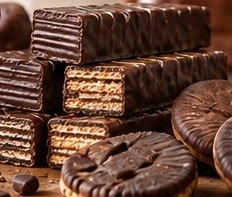
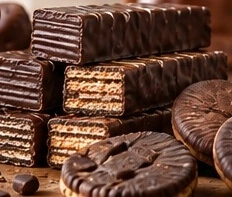
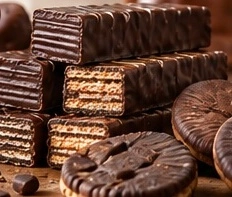
Compound-coated wafers and biscuits

Why is wafer and biscuit coating about more than flavour?

Beyond flavour and appearance, compound coating affects mechanical integrity, moisture protection, filling-fat management and handling during eating. Low-density, crisp wafers are especially sensitive to stresses after coating. Biscuits may be oilier, more porous or drier depending on their formulation.

Main goal: protect the crisp centre without weighing it down. A thin, uniform layer may therefore be more valuable than a high coating weight.

The key wafer issue: moisture balance and conditioning

Wafer sheets can be very dry and brittle. Moisture absorbed from the environment or filling can change their dimensions. Conditioning before industrial enrobing helps equalise moisture within the sheets. Bühler describes wafer conditioning as a way to reduce coating cracks or fragmentation after enrobing.

A cracked shell does not always mean the wrong compound. Post-coating dimensional changes or internal stresses in the centre can cause the same defect.

Full, partial and bottom coating

Full coating

The strongest coating sensation and environmental barrier. Weight, corner build-up and cooling need closer control.

Partial coating

Leaves the wafer or biscuit character visible, reduces coating ratio and creates visual contrast.

Bottoming

Coats only the base, or provides a base layer before full enrobing. Reduces sticking and protects the underside.

Wafer and biscuit flow on an enrobing line

Products pass through a compound curtain on a wire belt; some enrobers have a separate bottoming bath. The blower removes excess, vibration reduces skirts and the detailer cleans the base at transfer. Each of these affects coating weight and appearance.

Compound-coated wafers and biscuits

Do not rely only on heat for thin coating

Optimise suitable flow, curtain volume, blower and belt speed together. Raising temperature alone can disturb the fat system's expected crystallisation.

Viscosity and weight in wafer coating

Because wafers have large surface area and low weight, a few grams of coating can change the overall formulation percentage substantially. Viscosity is therefore especially important for cost control. More fluid compounds help produce thin layers; medium-fluid systems can provide a stronger crack and coating sensation.

TargetCoating approachRisk
Very thin premium layerHigher flow + strong weight controlCentre visible in places
Distinct crisp shellMedium flow, thicker layerMasking wafer flavour
Partial coatingPrecise curtain positioning and product arrangementUneven coating boundary
BottomingControlled lower-bath heightEdge skirt formation

Filling fats and fat migration

Wafer blocks often contain fat-based creams. Filling fat and coating fat can migrate between phases over time, softening the coating, changing bloom tendency or altering sensory fracture. Select the outer coating through shelf tests with the filling fat, not only by its flow during processing.

Shelf-test recommendation: do not accept fresh-product gloss as sufficient for a new coating/filling combination. Monitor hardness, bloom and greasy touch under different temperature scenarios.

Why does biscuit surface type matter?

A smooth, low-porosity biscuit differs from a crumbly, high-fat cookie. Crumbs can enter the circulating compound and gradually change its viscosity. Oily biscuits require attention to adhesion and fat migration; very dry ones require moisture balance and crack control.

Smooth biscuit

Suitable for thin, uniform full or partial coating.

Sandwich biscuit

Also assess the long-term interaction of filling fat and outer coating.

Cookie type

Rough surfaces retain more coating; control weight and air bubbles.

Cooling coated wafers and biscuits

The tunnel must give the coating enough strength without disrupting centre moisture balance or causing condensation. Uneven tunnel airflow can set one side faster and produce gloss differences.

Cracking and chipped edges

Classify wafer-coating cracks into three areas: coating crystallisation/hardness, centre dimensional changes and mechanical impact. Softer coating is not always the solution. First determine whether cracking occurs in the tunnel, during packing or during shelf life.

DefectPossible root causeCheck
Lengthwise crackWafer dimensional change / internal stressWafer conditioning and filling moisture
Coating chips at a cornerThick corner build-up + impactFlow, blower and packing
Dull surfaceCooling / temperature fluctuationsTunnel profile and storage
Coating softensMigration from filling fatFat compatibility and shelf testing

Packaging and crispness

Crispness is a wafer's core promise. Even with a coating moisture barrier, high water-vapour transmission through packaging can let the product absorb ambient moisture over time. Suitable film, reliable seals and packing-area relative-humidity control preserve the original snap.

Product-development checklist

Define the centre and filling system

Specify wafer moisture, filling fat and product geometry.

Set the coating-weight target

Combine the sensory target with the cost limit.

Optimise the line as a whole

Evaluate curtain, bottoming, blower, vibration and belt speed together, not in isolation.

Start shelf tests early

Track coating/filling fat compatibility and crispness during development.

Frequently asked questions

Is the thinnest wafer coating always best?

No. Thin coating may benefit cost and mouthfeel, but must still be thick enough for the desired flavour, colour coverage and mechanical protection.

Why condition wafer sheets?

To balance moisture distribution and reduce cracking caused by dimensional changes after coating.

Why does coating soften after a few weeks?

Filling-fat migration is one possible cause. Evaluate storage temperature and fat compatibility through shelf tests.

Industrial trial plan: wafers and biscuits

A good pilot should not merely change compound brand or viscosity. Include centre moisture, filling fat, product geometry and line settings in the same plan.

TrialKeep constantVariableMeasurement
ASame wafer/filling and beltCoating flowWeight, corner coverage, mouthfeel
BSame compoundBlower levelCoating ratio, surface lines, skirt
CSame compound and lineWafer conditioning levelCracks after 24 hours and during storage
DSame outer coatingFilling fat systemHardness, bloom, greasy touch

Assess coating ratio alongside product weight

In mini wafers or thin biscuits, a small absolute weight increase makes a large percentage difference. A few extra grams can change target cost, total fat and the consumer's sense of whether they are eating wafer or coating. Sample weighing is therefore one of the most practical indicators of line settings.

Record when wafer cracks appear

An intact shell at tunnel exit that cracks hours later may reflect changing centre dimensions. Cracks during packing more likely involve impact or thickness. Those developing after weeks call for investigation of moisture transfer, fat migration and storage temperature cycles. Knowing when cracks start narrows the root cause much faster than noting their presence alone.

Line hygiene and crumb loading

As biscuit crumbs or wafer dust accumulate in the circulation tank, actual solids loading and surface quality can change. Filtration, tank cleaning and crumb removal at entry matter as much as the recipe. If viscosity changes between the beginning and end of a shift, check circulating-mass contamination as well as temperature.

Technical source notes

This article draws on industry sources, equipment manufacturers' process descriptions and general food-engineering principles. Validate exact working temperatures, cooling profiles and formulations against the compound's technical specifications and the production line.

Compound Coating Technologies · Part 5/5

Compound Coating for Donuts, Cakes and Bars

Flexible glaze, crack control on soft centres, bar enrobing, crumb management, cuttable coatings and decoration.

Flexible glaze and adhesionFull / bottom coating on barsCuttable shells for cakesReading time: 11–14 min
Compound-coated donut, muffin and cake

One coating encounters three different mechanical behaviours

The main challenge is centre movement. Donuts are soft and uneven; cakes flex under pressure and are cut; cereal or protein bars can be rough, oily or particulate. A very hard, brittle coating may therefore fail to deliver the desired result in these applications.

Application principle: the more flexible and irregular the centre, the more adhesion and mechanical compatibility matter. Fat-based glazes may be preferred for donuts to follow uneven surfaces and reduce cracking during storage.

Donut coating: flexibility matters as much as appearance

Donut surfaces are not flat; frying or baking changes oil level, crust roughness and surface temperature. Coating must flow into curves and, after setting, remain attached without cracking during packing or biting.

Donut process flow

Standardise surface oil and temperature

An overly hot or oily surface after frying changes adhesion and weight. Use controlled resting/cooling before coating.

Adjust dipping or the glaze curtain

A consistent coating-line height ensures visual uniformity. Different product sizes also change coating percentage.

Drain excess coating

Retain enough coating without thick drops or feet forming underneath.

Decorate before setting

The surface must be in the right tackiness window for sprinkles, nut pieces or coloured decoration to adhere.

Why does donut coating crack?

Compression or movement in the package deforms the donut centre. An insufficiently flexible coating develops microcracks; excessive thickness makes them more visible. Flexibility and adhesion can therefore matter more than high snap in donut fat-based glazes or compounds.

Cake coating: cutability and crumb management

Cakes can be fully, partly or top-coated. On small cakes and cake bars, the coating should not crack, detach or bring crumbs to the surface during cutting. Crumbly surfaces can contaminate the tank, making post-cutting crumb removal and handling design important.

Soft cake

Compliant, cuttable coating; avoid an overly hard shell.

Filled cake

Monitor filling-fat interaction with the outer coating during storage.

Mini cake bar

Edge and base coating weight relative to the small product weight is critical.

Full coating, bottoming and drizzle on bars

Cereal, protein, nut and caramel bars can use compound for full coating, base layers or decoration. Rough surfaces retain more coating; viscosity and blower settings therefore make a large difference to bar coating weight.

ApplicationAdvantageSpecific risk
Full enrobingFull flavour and strong barrierHigh weight on rough surfaces
BottomingEasy handling, base barrier, low costUneven edge line
Partial coatingLeaves centre ingredients visiblePrecise alignment on the coating line
DrizzleVisual appeal, low coating ratioNozzle and line standardisation

Covering rough bar surfaces

Cereal and nut pieces create protrusions. Thick compound can form heavy bridges between them; very fluid compound may coat high points while leaving deep gaps open. The goal is not to fill every void, but to achieve acceptable colour coverage and protection at the target weight.

Independent upper-curtain and bottoming adjustment can produce a continuous base with a thinner top. Blowing and vibration remove unnecessary excess.

Coating hardness: snap or cuttable?

Strong snap may benefit a tablet but cause cracks and detachment on soft cakes or bars. Some compound formulations are therefore designed for softer or more elastic textures. Test cutting and biting with the centre, not only the coating's isolated hardness.

Simple test: instead of only breaking at room temperature, test cutting, biting and gentle bending in realistic consumption conditions. If the shell detaches in plates, the system may be mechanically incompatible.

Oily surfaces and adhesion

Fried donuts, fatty cakes and nut bars may carry free surface oil, which can impair wetting and adhesion. Resting the product, balancing surface oil and standardising centre formulation are important. For recurring problems, review centre processing as well as the coating recipe.

Decoration: use the coating's setting window

Timing matters for chopped nuts, sugar decorations, biscuit pieces and contrasting drizzle. Apply solid decorations while the main coating is sticky enough, but not so early that they sink out of sight. A second fat-based drizzle must set compatibly with the base surface.

Common defects

SymptomPossible causeFirst check
Donut coating cracksCoating too hard/thick, centre deformationFat system, weight and product temperature
Cake coating peelsCrumbs or oily surfaceSurface cleaning before coating
Gaps remain on barsRough centre + unsuitable flowViscosity, curtain quantity, geometry
Thick foot at the baseInsufficient detailing / vibrationTransfer and bottoming settings
Coating remains stickyInsufficient cooling or unsuitable fat systemTunnel and technical-sheet conditions

Packaging and heat resistance

Packaging should not press on coated soft products such as donuts and cakes. Transport friction can reduce bar gloss. Products for hot climates may need greater temperature stability, but balance heat resistance with melting quality in the mouth for the specific product.

Coating selection by application

ProductPriorityCoating approach
DonutsFlexibility, adhesion, smooth glazeCompliant fat matrix, controlled dipping/glazing
Mini cakeCutability, crumb controlSoft/cuttable coating, moderate weight
Cereal barThin layer covering rough surfacesEnrobing + effective blower
Protein barCompatibility with soft centresAdjust hardness to the centre
Nut barFat migration + rough surfaceCompatible fat system and shelf tests

Frequently asked questions

Why can very hard compound be a problem on donuts?

If it cannot follow the flexible centre, it can crack or detach in pieces. A more flexible glaze may help.

Why are cake crumbs a problem in the coating line?

Crumbs enter circulating compound, causing roughness and viscosity changes. Pre-coating crumb control and filtration are important.

Why can bar coating costs rise quickly?

Rough, high-surface-area centres retain more coating than expected. Optimise flow, blower and target weight together.

Application-specific pilot plan

Donuts, cakes and bars may share an enrober, but their optimum coatings differ. Define successful coating separately for each product in pilot trials.

ProductSuccess criterionPilot variable
DonutsSmooth glaze, no cracks, good adhesionProduct cooling time, glaze flow, draining
Mini cakeShell follows the centre during cuttingCoating hardness and thickness
Cereal barRough surface covered at controlled weightCurtain quantity and blower
Protein barNo shell separation on the soft centreFat system and cooling
Nut barStable hardness and appearance over shelf lifeCompatibility with filling/centre fat

The donut temperature window

Direct coating after frying or baking may give an overly thin layer or delayed setting because of surface heat and free oil. Excessive cooling can freeze compound on contact, producing a thick, wavy surface. Rather than memorising one temperature, establish a process window with repeatable surface oil and coating flow.

Simulating cake cutting

Even products delivered whole can experience bending and pressure in transport. Test pilot samples with both knife cutting and gentle hand bending to reveal shell detachment. Cuttable compound systems can benefit these products.

Calculating bar surface area

As roughness increases, actual surface area exceeds simple geometric estimates. Weight measured on a flat laboratory model may therefore not match an industrial cereal bar. Confirm cost targets by weighing actual production samples before and after coating. If high points pierce the coating at edges, improving the centre surface or forming process may be cheaper than increasing coating thickness.

Technical source notes

This article draws on industry sources, equipment manufacturers' process descriptions and general food-engineering principles. Validate exact working temperatures, cooling profiles and formulations against the compound's technical specifications and the production line.